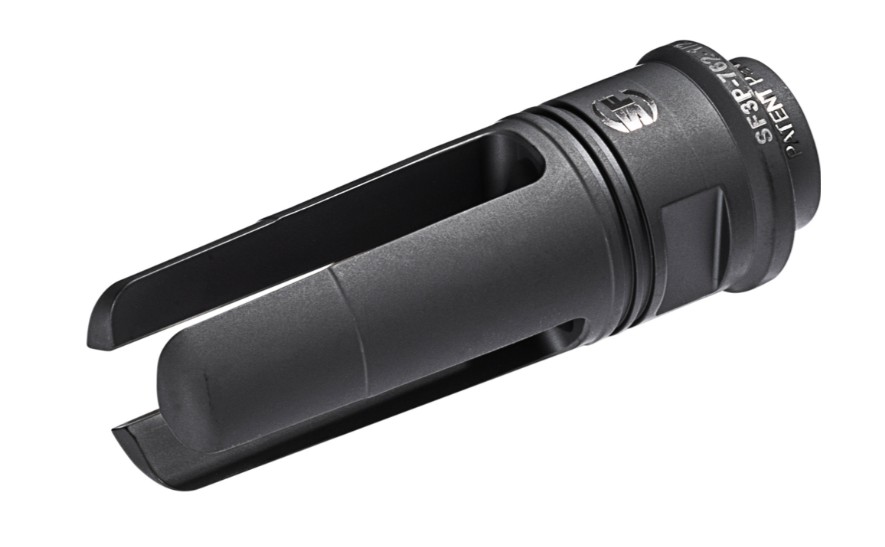
When it comes to muzzle devices, the terminology can be confusing. Walk into any gun shop and you’ll hear these terms used interchangeably, but muzzle brakes, compensators, and flash hiders are fundamentally different tools designed to solve distinct problems. Understanding these differences isn’t just about semantics—it’s about optimizing your rifle’s performance for your specific shooting application.
In this comprehensive guide, we’ll break down the physics behind each device type, explain when and why you’d choose one over another, and help you make an informed decision based on your needs. Whether you’re a competitive shooter looking to shave seconds off your split times, a tactical operator managing flash signature, or a precision shooter fighting recoil at long range, this guide will clarify which muzzle device belongs on your rifle.
Understanding the Fundamentals: What Happens When You Fire
Before we dive into specific device types, it’s essential to understand what’s actually happening at your rifle’s muzzle when you pull the trigger.
The Physics of Recoil
When you fire a rifle, the propellant ignites and creates high-pressure gas that propels the bullet down the barrel. As the bullet exits the muzzle, this gas—still under tremendous pressure (often 5,000-15,000 PSI depending on the cartridge)—explosively expands into the atmosphere. This rapid gas expansion creates several effects:
Recoil Force: According to Newton’s third law (for every action, there’s an equal and opposite reaction), the forward momentum of the bullet and expanding gases creates a rearward force on the rifle. This is felt as recoil.
Muzzle Rise: The bore axis of most rifles sits above the contact points with your body (shoulder, hands). This creates a lever arm, causing the rifle to rotate upward as rearward force is applied—what we call muzzle rise or muzzle flip.
Flash: The high-temperature propellant gases mixing with atmospheric oxygen create a bright flash, especially visible in low-light conditions.
Blast: The supersonic expansion of gases creates a pressure wave—the concussive blast you feel and hear when shooting.
Different muzzle devices manipulate these gases in specific ways to counteract or redirect these effects. The key is understanding that all three device types work with the same fundamental resource (propellant gas), but they prioritize different outcomes.
Muzzle Brake: The Recoil Reducer
What Is a Muzzle Brake?
A muzzle brake is a device specifically designed to reduce felt recoil by redirecting propellant gases to counteract the rifle’s rearward movement. It’s the most effective device type for pure recoil reduction, often cutting felt recoil by 40-70% depending on design efficiency and caliber.
How Muzzle Brakes Work: The Physics
Muzzle brakes operate on a simple but brilliant principle: redirect high-pressure gas perpendicular or rearward to the bore axis to create forward thrust that opposes recoil.
The Mechanism:
- Gas Capture: As the bullet exits the brake, it’s followed by a column of high-pressure gas traveling at supersonic speeds (often Mach 2-3).
- Gas Redirection: The brake features precisely angled baffles or ports (typically angled 90° or rearward at 45-60°) that intercept and redirect this gas flow.
- Counter-Force Generation: When gas strikes these baffles and is redirected perpendicular or rearward, it creates thrust in the forward direction (Newton’s third law again). This forward thrust directly opposes and partially cancels the rearward recoil force.
- Pressure Distribution: Multi-chamber designs create successive expansion chambers that progressively slow gas velocity while maintaining pressure for longer, extending the duration of the counter-force.
The Math: If we simplify the physics, approximately 30-40% of perceived recoil comes from the bullet’s momentum, while 60-70% comes from propellant gas (rocket effect). An efficient brake can redirect a significant portion of that gas component, explaining why 50-60% recoil reduction is achievable.
Design Variations
Single-Chamber Brakes: Feature one large expansion chamber with side ports. Simple, effective, but less efficient than multi-chamber designs. Example: A2-style brakes.
Multi-Chamber Brakes: Use 2-4 progressive chambers with increasingly larger ports. Each chamber slows gas velocity while maintaining pressure. More efficient but heavier. Examples: Precision Armament M4-72, VG6 Gamma.
Radial Brakes: Ports arranged 360° around the bore. Very effective but create maximum side blast. Examples: Many competition brakes.
Top-Vented Brakes: Block bottom ports to prevent dust signature when shooting prone. Examples: JP Recoil Eliminator, Area 419 Hellfire.
Self-Timing Brakes: Use internal locking collars instead of crush washers for perfect port alignment. Examples: Dead Air KeyMo, Area 419 Hellfire.
Pros of Muzzle Brakes
Maximum Recoil Reduction: Nothing beats a well-designed brake for pure recoil mitigation. This enables:
- Faster follow-up shots in competition or tactical scenarios
- Easier spotting of bullet impacts through the scope (especially critical in long-range precision shooting)
- Reduced shooter fatigue during high-volume practice sessions
- Ability to shoot higher-recoiling cartridges comfortably (.300 Win Mag, .338 Lapua, etc.)
Reduced Muzzle Rise: Most brakes also feature top ports or asymmetric designs that vent more gas upward, directly countering muzzle flip. This keeps your sights on target between shots.
Improved Accuracy Potential: By reducing recoil disturbance during the bullet’s barrel time and improving shooter consistency, brakes can contribute to better accuracy, particularly for less experienced shooters or in rapid-fire strings.
Precise Shooting from Unconventional Positions: The dramatically reduced recoil makes it easier to shoot accurately from awkward positions (barricades, off-hand, etc.) where body mechanics can’t absorb recoil as effectively.
Cons of Muzzle Brakes
Increased Blast Concussion: This is the primary drawback. By redirecting gases perpendicular and rearward, brakes dramatically increase the pressure wave experienced by the shooter and anyone nearby. This manifests as:
- Significantly louder perceived noise (even though actual muzzle sound pressure may be similar)
- Concussive pressure wave felt in the chest and sinuses
- Substantial discomfort for shooters on adjacent shooting benches
- Potential hearing damage risk even with hearing protection if PPE is inadequate
Flash Signature: Most brakes do nothing to reduce or hide muzzle flash—some actually increase it by creating secondary combustion as gas mixes with oxygen. This is problematic for low-light tactical applications or hunting.
Not Suppressor-Compatible: Many brake designs don’t play well with suppressors. The gas redirection that makes brakes effective also creates turbulence and back-pressure issues when a suppressor is attached. If you plan to run suppressed, you’ll typically need a dedicated muzzle device (flash hider or brake/suppressor hybrid).
Added Weight: Effective brakes, especially multi-chamber designs, add 2-5 oz to the end of your barrel, affecting handling and balance.
Debris Signature: Side and downward gas ports kick up massive dust clouds when shooting prone, revealing your position. This is why many precision/tactical brakes now incorporate top-venting or completely block bottom ports.
When to Use a Muzzle Brake
Muzzle brakes are ideal for:
- Precision Long-Range Shooting: PRS, ELR, F-Class where spotting impacts through the scope is critical
- Competition Shooting: 3-Gun, practical rifle matches where speed and recoil management are paramount
- Magnum Cartridges: .300 Win Mag, .338 Lapua, .50 BMG where recoil is punishing
- High-Volume Training: When you’re putting 200+ rounds downrange and fatigue becomes a factor
- Bench Shooting: Informal target shooting where blast concussion doesn’t affect others
Avoid muzzle brakes for:
- Tactical/Home Defense: Flash signature and blast concussion are serious drawbacks
- Hunting: Blast concussion can cause hearing damage without electronic hearing protection, and you usually won’t have that in the field
- Indoor Range Use: You’ll be universally hated by other shooters
- Suppressor Use: Unless specifically designed as a suppressor mount
Compensator: The Muzzle Rise Fighter
What Is a Compensator?
A compensator is a muzzle device designed primarily to reduce muzzle rise (vertical movement) rather than rearward recoil. While many modern “comps” provide some recoil reduction, their primary function is to keep the muzzle flat during rapid fire by venting gas upward.
How Compensators Work: The Physics
Compensators exploit the fact that muzzle rise is caused by the bore axis sitting above the shooter’s contact points, creating rotational force. By venting gas upward, they create downward force that counteracts this rotation.
The Mechanism:
- Upward Gas Venting: The compensator features ports on the top surface (and often slight rearward angle) that allow high-pressure gas to escape upward.
- Downward Counter-Force: As gas exits through top ports, it creates a downward force on the muzzle (Newton’s third law). This downward force directly opposes the natural upward rotation of the firearm.
- Timing: The key is that this downward force occurs while the bullet is still in the barrel or immediately after exit—during the critical window when muzzle rise begins.
- Balance: Well-designed compensators carefully balance port size and positioning to create just enough downward force to flatten muzzle movement without overdoing it (which would drive the muzzle down).
Design Philosophy: While a brake prioritizes redirecting gas perpendicular/rearward for maximum recoil reduction, a compensator prioritizes upward gas venting. Many modern devices are hybrids that do both.
Design Variations
Classic Compensators: Top ports only, minimal to no side ports. Example: AK-74 muzzle device, classic AR “comp” designs.
Hybrid Brake/Comps: Feature both side ports (for recoil reduction) and pronounced top ports (for muzzle rise control). This is actually the most common modern design. Examples: VG6 Gamma, Strike Industries J-Comp, SJC Titan.
Linear Compensators: Completely different approach—channel gases forward away from the shooter while using a small amount of top venting. These reduce blast more than control rise. Examples: Kaw Valley Linear Comp, Noveske Flaming Pig.
Competition-Specific: Often extremely aggressive with large expansion chambers and precisely calculated port sizes optimized for specific calibers and barrel lengths. Examples: SJC Titan, Precision Armament EFAB.
Pros of Compensators
Muzzle Rise Control: The primary benefit. A good compensator can reduce muzzle rise by 60-80%, keeping your sight picture nearly flat between shots. This translates to:
- Dramatically faster follow-up shots in competition
- Better transition speed between multiple targets
- Easier doubles on game animals (where legal)
- Improved control during rapid fire
Moderate Recoil Reduction: Modern hybrid designs typically provide 30-50% recoil reduction—not as much as a pure brake, but still substantial. For many shooters and applications, this is the “sweet spot” of getting enough recoil reduction without excessive blast.
Competition-Oriented: The flat shooting characteristics make comps the go-to choice for competition shooters who need to drive the gun quickly between targets. The ability to maintain sight picture is more valuable than maximum recoil reduction for many competitive applications.
Better Than Flash Hiders for Recoil: While not as effective as pure brakes, compensators reduce recoil far better than flash hiders, making them a good middle-ground option.
Cons of Compensators
Still Produces Blast Concussion: While typically less severe than pure brakes (due to more gas venting upward rather than to the sides), compensators still redirect propellant gases and create concussion. You’ll still be loud and create pressure waves.
Flash Signature: Like brakes, most compensators do little to nothing to reduce muzzle flash. The focus is on gas redirection for muzzle control, not flash suppression.
Less Recoil Reduction Than Pure Brakes: If maximum recoil reduction is your priority (heavy magnums, long-range precision), a compensator won’t perform as well as a dedicated brake.
Potential Over-Compensation: Some aggressive comps on light-recoiling cartridges (5.56, for example) can actually drive the muzzle downward. While this isn’t necessarily bad, it does mean you’re pushing the muzzle off-target in a different direction.
Caliber and Load Sensitivity: Compensator effectiveness varies significantly based on gas volume and pressure, which changes with different calibers, barrel lengths, and ammunition loads. A comp optimized for 5.56 from a 16″ barrel may not work well on a 10.5″ barrel.
When to Use a Compensator
Compensators are ideal for:
- Competition Shooting: Especially 3-Gun, USPSA PCC, run-and-gun style matches where transitions matter more than pure recoil reduction
- Rapid Fire Applications: Any scenario where you’re taking multiple quick shots and need to maintain sight picture
- Intermediate Cartridges: 5.56, 7.62×39, .300 Blackout supersonic where muzzle rise is more problematic than heavy recoil
- Shorter Barrels: SBRs and pistol-length guns where muzzle rise is exaggerated due to shorter sight radius and gas system dynamics
- Dynamic Shooting Sports: Two-gun, outlaw matches, action shooting where you’re moving and engaging multiple targets
Avoid compensators for:
- Low-Light Tactical Use: Flash signature remains an issue
- Hunting: Same blast concussion concerns as brakes
- Heavy Magnum Cartridges: If you’re shooting .338 Lapua, you want maximum recoil reduction, not just muzzle rise control
- Precision Long-Range: If spotting impacts at 1000+ yards is your goal, pure brake is better
Flash Hider: The Signature Reducer
What Is a Flash Hider?
A flash hider (also called flash suppressor, though technically nothing “suppresses” flash—it’s reduced or dispersed) is a muzzle device designed to reduce or disguise the visible flash signature produced when propellant gases mix with atmospheric oxygen. These devices prioritize reducing the shooter’s and observers’ ability to see muzzle flash over any recoil or muzzle rise benefits.
How Flash Hiders Work: The Physics
Flash hiders work through several mechanisms, often combining multiple approaches:
The Mechanism:
- Gas Expansion and Cooling: Flash hiders create expansion chambers that allow propellant gas to expand and cool before mixing with oxygen. Cooler gas = less vigorous combustion = reduced flash.
- Gas Dispersion: By breaking up the gas column into smaller streams through multiple ports or tines, the device increases surface area for cooling and disperses the flash across a wider area, making it less visible as a concentrated point source.
- Flash Pattern Disruption: Some designs intentionally create specific flash patterns (ring, cross, etc.) that break up the fireball shape, making it harder for observers to pinpoint the shooter’s location.
- Oxygen Mixing Control: More sophisticated designs carefully control how and where propellant gas mixes with atmospheric oxygen, either slowing the mixing (to allow cooling first) or accelerating complete combustion inside the device (leaving less unburned propellant to flash outside).
- Secondary Combustion Management: Some flash hiders actually complete propellant combustion inside the device in a controlled manner, preventing the bright secondary combustion that occurs when hot gas hits fresh oxygen.
Important Note: Flash hiders reduce visible flash but do nothing meaningful for IR signature or heat signature visible to thermal optics. For true signature reduction, you need a suppressor.
Design Variations
Pronged Flash Hiders: The classic design. Three or four prongs break up gas flow and create expansion chambers. Examples: Original M16A1 three-prong, modern YHM Phantom.
Birdcage Flash Hiders: Most common design. Multiple slots arranged radially around a solid core. Simple, effective, lightweight. Examples: A2 flash hider (most common AR-15 muzzle device), AAC Blackout, BCM A2X.
Closed-Tine Designs: Similar to pronged but with a cap over the front. Reduces flash more effectively but heavier. Examples: Surefire 3-prong, AAC 51T.
Vortex/Spiral Flash Hiders: Use helical or spiral slots to induce rotational gas flow, improving mixing efficiency and cooling. Examples: Some Eastern European designs, specialty units.
Hybrid Flash/Brake Designs: Attempt to reduce flash while providing some recoil reduction. Generally compromise on both functions. Examples: Surefire ProComp (though it’s more compensator than flash hider).
Pros of Flash Hiders
Reduced Flash Signature: The primary benefit and the reason these exist. Flash reduction is critical for:
- Tactical/Military Applications: Not giving away your position to enemy forces, especially in low-light operations
- Night Hunting: Preserving night vision and not spooking game (where legal)
- Low-Light Self-Defense: Reducing visual disruption to the shooter’s own vision after the first shot
Minimal Blast Increase: Unlike brakes and comps, flash hiders don’t significantly redirect gases toward the shooter or bystanders. The blast signature is close to having a bare muzzle. This makes them significantly more pleasant to shoot and more considerate to others on the firing line.
Suppressor-Compatible: Most flash hiders, especially those designed as suppressor mounts (like the Surefire 3-prong or Dead Air flash hider), work excellently as quick-detach suppressor mounting systems. The design philosophy aligns with suppressor use.
Lightweight: Most flash hiders are among the lightest muzzle devices, typically adding only 1-3 oz. This is advantageous for general-purpose rifles where handling and balance matter.
Doesn’t Increase Recoil: While they don’t reduce recoil, they also don’t make it worse, unlike some very poorly designed muzzle devices.
Versatile: Flash hiders are true general-purpose devices suitable for the widest range of applications—hunting, home defense, recreational shooting, tactical use.
Cons of Flash Hiders
No Recoil Reduction: Flash hiders provide essentially zero recoil reduction. Some claim minor benefits from gas dispersion, but it’s negligible—typically 0-10% at most. If recoil management is a priority, a flash hider is the wrong choice.
No Muzzle Rise Control: Similarly, flash hiders do nothing meaningful to reduce muzzle rise. The gas dispersion is omnidirectional and unfocused.
Less Effective Than Suppressors: If signature reduction is truly critical, a suppressor is vastly superior. Suppressors eliminate virtually all visible flash, reduce sound by 20-40 dB, and reduce felt recoil. If you can run a suppressor legally, it’s better than a flash hider in every measurable way except one: added length.
Effectiveness Varies by Ammunition: Flash reduction is heavily dependent on propellant type and burn rate. Some ammunition produces significantly more flash than others. A flash hider can only work with what it’s given.
Minimal Benefit for Some Calibers: Cartridges with very efficient powder burns (like .22 LR, or rifle cartridges fired from very long barrels) produce minimal flash to begin with, making flash hiders somewhat redundant.
When to Use a Flash Hider
Flash hiders are ideal for:
- General Purpose Rifles: If your rifle serves multiple roles and you don’t have specific recoil or muzzle rise concerns, a flash hider is the most versatile choice
- Home Defense/Tactical AR-15s: Reducing flash signature in low-light encounters while maintaining manageable blast
- Hunting Rifles: Especially night hunting (where legal) or low-light conditions, preserving the shooter’s night vision
- Suppressor Hosts: If you plan to run suppressed most of the time, use a flash hider as your suppressor mount
- Considerate Range Use: When shooting at public ranges where you don’t want to annoy other shooters with excessive blast
- Lightweight Builds: When every ounce matters and you can’t afford the weight of a brake or comp
Flash hiders are less ideal for:
- Heavy Recoiling Rifles: If you’re shooting .300 Win Mag or .338 Lapua, the lack of recoil reduction will be keenly felt
- Competition Shooting: The lack of recoil and muzzle rise control puts you at a disadvantage against competitors using brakes/comps
- Pure Bench Shooting: If you’re just punching paper at 100 yards from a bench, flash reduction provides no benefit
Direct Comparison: At a Glance
| Feature | Muzzle Brake | Compensator | Flash Hider |
|---|---|---|---|
| Primary Function | Recoil reduction | Muzzle rise control | Flash signature reduction |
| Recoil Reduction | Excellent (40-70%) | Good (30-50%) | Minimal (0-10%) |
| Muzzle Rise Control | Good to Excellent | Excellent | Minimal |
| Flash Signature | No reduction (often worse) | No reduction | Excellent reduction |
| Blast Concussion | Very High | High | Minimal (similar to bare muzzle) |
| Noise to Shooter | Significantly increased | Increased | Minimal increase |
| Suppressor Compatible | Rarely | Sometimes | Usually |
| Weight | Heavy (3-5 oz) | Medium (2-4 oz) | Light (1-3 oz) |
| Ideal For | Long-range precision, competition, magnum cartridges | Competition, rapid fire, intermediate cartridges | General purpose, tactical, hunting, home defense |
| Worst For | Indoor ranges, hunting, tactical use | Low-light operations, considerate shooting | Competition, heavy magnums |
| Price Range | $50-$200+ | $40-$150 | $20-$100 |
| Typical Effectiveness | Dramatic and immediately noticeable | Very noticeable | Subtle but important in right context |
How to Choose: Decision Framework
Choosing the right muzzle device comes down to honest assessment of your priorities and primary use case. Here’s a decision tree to guide you:
Step 1: What’s Your Primary Concern?
If RECOIL REDUCTION is your top priority:
- Choose a muzzle brake
- Best for: Precision long-range, heavy magnums, high-volume training
- Accept the trade-offs: Increased blast, flash, and noise
If MUZZLE RISE CONTROL is your top priority:
- Choose a compensator (or hybrid brake/comp)
- Best for: Competition, rapid fire, dynamic shooting
- Accept the trade-offs: Still produces blast, no flash reduction
If FLASH REDUCTION or VERSATILITY is your top priority:
- Choose a flash hider
- Best for: Tactical, hunting, home defense, general purpose
- Accept the trade-offs: No recoil or muzzle rise control
Step 2: Consider Your Environment
Indoor ranges: Flash hider only. You’ll be asked to leave if you show up with a brake.
Public outdoor ranges: Flash hider or mild compensator. Be considerate of others.
Private property/isolated shooting: Any device works; choose based on performance needs.
Hunting: Flash hider. Blast concussion without hearing protection causes damage.
Home defense: Flash hider. Flash signature and blast in enclosed spaces are serious concerns.
Competition: Brake or compensator based on specific match requirements and shooting style.
Step 3: Consider Your Cartridge
Heavy magnums (.300 Win Mag, .338 Lapua, .50 BMG): You need maximum recoil reduction. Choose a high-efficiency brake. The blast concussion is worth it for manageable recoil.
Intermediate cartridges (5.56, 7.62×39, .300 Blackout): Recoil is already manageable. Choose based on whether you want muzzle rise control (comp) or versatility (flash hider).
Precision cartridges (6.5 Creedmoor, 6mm Creedmoor, .260 Rem): Depends on application. Competition/PRS = brake. Hunting = flash hider.
Pistol caliber carbines (9mm, .45 ACP): Minimal recoil means compensator for muzzle rise is the usual choice in competition. Flash hider for general use.
Step 4: Will You Run a Suppressor?
If yes, primarily: Choose a flash hider designed as a suppressor mount (Dead Air KeyMo, Surefire 3-prong, YHM Phantom, etc.). You’ll get flash reduction when unsuppressed and a mounting system when suppressed.
If yes, occasionally: Choose a suppressor-compatible device. Many flash hiders and some hybrid comps work.
If no, never: Choose purely based on performance needs without compatibility concerns.
Step 5: Budget Considerations
Entry-Level ($20-$50): Basic A2 flash hider, simple single-chamber brakes, basic comps. Perfectly functional for most applications.
Mid-Range ($50-$100): Quality flash hiders, effective multi-chamber brakes, good hybrid comps. Best value for performance.
High-End ($100-$200+): Premium materials (titanium, Inconel), self-timing systems, maximum efficiency designs, suppressor QD mounts. Worth it for serious competition or specialized applications.
Real-World Examples
Example 1 – PRS Competitor: Shooting .6.5 Creedmoor in Precision Rifle Series matches. Needs to spot impacts through scope at 1000 yards.
- Choice: High-efficiency brake (Area 419 Hellfire, Precision Armament M4-72)
- Reasoning: Recoil reduction for spotting impacts trumps all other concerns
Example 2 – 3-Gun Competitor: Running a 16″ AR-15 in 5.56, multiple rapid shots per stage, transitions between targets.
- Choice: Hybrid brake/comp (VG6 Gamma, SJC Titan)
- Reasoning: Balance of muzzle rise control and recoil reduction for speed
Example 3 – General Purpose AR-15: Home defense, range use, occasional 3-gun, possible hunting.
- Choice: Flash hider (A2, BCM A2X, Surefire 3-prong)
- Reasoning: Versatility, flash reduction for defense, suppressor-ready, range-friendly
Example 4 – .300 Win Mag Hunting Rifle: Western big game hunting, shots potentially at dawn/dusk.
- Choice: Flash hider or bare muzzle
- Reasoning: Recoil from a hunting rifle is manageable for the few shots you take; blast concussion without hearing protection is not
Example 5 – .338 Lapua Long-Range Rig: ELR shooting at 1500+ yards, bench and prone shooting.
- Choice: Top-vented brake (APA Little Bastard Gen 3, Area 419 Hellfire Match)
- Reasoning: Maximum recoil reduction to manage extreme cartridge; top-vented to reduce dust signature
Installation Considerations
Regardless of which device type you choose, proper installation is critical:
Thread Pitch Compatibility
Ensure your device matches your barrel’s thread pitch:
- .223/5.56: 1/2×28 TPI (most common)
- .308/7.62: 5/8×24 TPI (most common)
- 9mm: 1/2×28 or 1/2×36 TPI depending on manufacturer
Timing Methods
Crush Washer: Simple, cheap, one-time use. Washer compresses to time the device correctly. Good for flash hiders where perfect timing isn’t critical.
Shim Kits: Reusable, allows perfect timing, requires patience. Best for devices where port alignment matters (brakes, comps).
Self-Timing: Built-in mechanisms ensure perfect timing without washers. Most expensive but most convenient. Examples: Dead Air KeyMo, Area 419 system.
Peel Washers: Stackable precision washers you remove layers from to achieve perfect timing. Good middle ground.
Torque Specifications
Most devices: 20-30 ft-lbs for 1/2×28 threads, 30-40 ft-lbs for 5/8×24 threads
Always use: Proper torque wrench and armorer’s wrench with specific teeth for your device
Thread Locker: Medium-strength (blue Loctite) is common. Some competition shooters skip it for easy device changes.
Professional Installation
For precision rifles or expensive devices, consider professional installation, especially for:
- Pin and weld installations (permanent for NFA compliance)
- First-time installations if you’re not confident
- Timing critical competition devices
Common Myths and Misconceptions
Myth 1: “Compensators reduce recoil just as well as brakes”
Reality: While modern hybrid designs provide meaningful recoil reduction (30-50%), dedicated brakes still reduce recoil more effectively (40-70%). Compensators prioritize muzzle rise control, which is a different force vector.
Myth 2: “Flash hiders silence your gun”
Reality: Flash hiders do nothing for sound. The terms “suppressor” and “flash suppressor” create confusion, but flash hiders don’t suppress sound. Only actual suppressors (silencers) reduce sound signature.
Myth 3: “More ports = better performance”
Reality: Port count, size, and angle matter more than total number. An efficient 2-port brake can outperform a poorly designed 6-port brake. It’s about engineering, not port density.
Myth 4: “Brakes increase muzzle velocity”
Reality: This persists from a misunderstanding. Brakes don’t increase velocity. Some tests show minimal differences, but these are within measurement error and often due to slightly longer effective barrel length from the device adding minimal volume for gas expansion.
Myth 5: “You need an expensive device to see benefits”
Reality: A $30 A2 flash hider does its job excellently. A $50 VG6 Gamma provides great performance. Expensive devices often offer marginal improvements, better materials (titanium), or convenience features (self-timing) rather than dramatically better performance.
Myth 6: “Muzzle devices affect accuracy”
Reality: The device itself doesn’t make your rifle more or less accurate (same barrel, same ammunition). However, recoil reduction can improve practical accuracy by improving shooter consistency and reducing flinching. Saying “a brake makes my rifle more accurate” really means “a brake helps me shoot more accurately.”
Conclusion: Choose Based on Mission, Not Marketing
The “best” muzzle device doesn’t exist—only the best device for your specific application. Marketing often blurs the lines between brake, comp, and flash hider, with manufacturers claiming their device does everything. The reality is that physics involves trade-offs. A device optimized for recoil reduction (brake) necessarily redirects gas in ways that increase blast. A device optimized for flash reduction (flash hider) can’t simultaneously provide maximum recoil reduction.
Be honest about your priorities:
- Need to manage heavy recoil and spot impacts? Get a brake and accept the blast.
- Need flat-shooting rapid fire? Get a compensator and accept the noise.
- Need versatility and low signature? Get a flash hider and accept modest recoil.
- Want the best of all worlds? Get a suppressor—it reduces recoil, eliminates flash, cuts noise dramatically, and makes shooting more pleasant. The only downside is added length, cost, and the NFA process.
Understanding the fundamental physics behind each device type empowers you to cut through marketing hype and choose based on actual performance characteristics. Your muzzle device is a tool matched to a job—choose the right tool, and everything else falls into place.
Frequently Asked Questions
Q: Can I use a brake or comp with a suppressor?
A: It depends on the specific devices. Some hybrid designs work with suppressors, but many brakes create excessive back-pressure or turbulence. Flash hiders are generally the best suppressor hosts. Always verify compatibility before attempting.
Q: Do I need a muzzle device at all?
A: Legally, no (except in some restricted states for AR-15s). Practically, a basic flash hider costs $20-30 and provides flash reduction plus protects your threads. Even if you don’t need performance features, a thread protector or basic flash hider is wise.
Q: Will a brake or comp make my rifle louder?
A: Not louder in absolute decibels, but perceived loudness to the shooter and bystanders increases dramatically due to gas redirection. The sound is diverted toward you rather than straight forward, making it feel much louder even if a meter reads similar levels.
Q: Can I switch between devices for different situations?
A: Absolutely. Many competition shooters have multiple devices and swap them based on match requirements, shooting location, or personal preference. Just ensure proper installation each time.
Q: What about linear compensators—where do they fit?
A: Linear comps are a unique category that prioritizes directing blast forward (away from shooter/bystanders) over performance features. They’re excellent for indoor ranges and considerate shooting but provide minimal recoil or muzzle rise benefits. Think of them as “blast deflectors” rather than true compensators.
Final Thoughts: The key to muzzle device selection is matching tool to task. Understand what you’re trying to solve, accept the inherent trade-offs, and choose accordingly. There’s no universal “best” device—only the best device for your specific rifle, cartridge, and shooting application. Make an informed choice based on physics and priorities, not marketing buzzwords, and you’ll be well-served by your decision.
