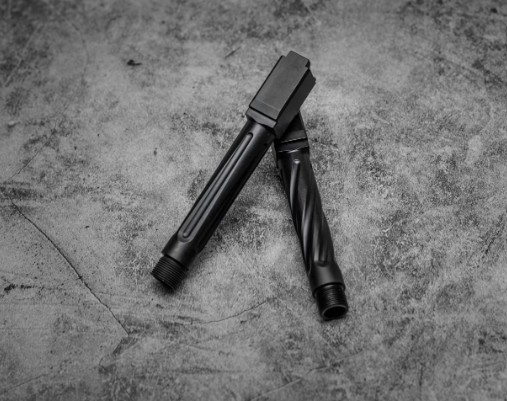
You’ve found the perfect muzzle brake, compensator, or flash hider for your rifle. The price is right, the reviews are stellar, and you’re ready to make the purchase. But wait—do you know your barrel’s thread pitch? Order the wrong specification and you’ll have an expensive paperweight that won’t thread onto your barrel. Order a device that’s close but not quite right, and you risk cross-threading, damaging your barrel crown, or—worse—having your muzzle device fail catastrophically during firing.
Thread pitch is one of those seemingly mundane details that’s absolutely critical to get right. Unlike more forgiving specifications where “close enough” might work, thread pitch demands precision. There’s no room for error, no workarounds, and no making it fit if it’s wrong.
This comprehensive guide will walk you through everything you need to know about muzzle device thread pitch: what it is, how to identify it, which standards apply to different calibers, how to verify compatibility, and how to avoid the costly mistakes that plague even experienced shooters. Whether you’re installing your first muzzle device or your fiftieth, this guide ensures you get it right every time.
Understanding Thread Pitch: The Basics
What Is Thread Pitch?
Thread pitch is a measurement that describes the threading on your rifle barrel and the corresponding threads inside a muzzle device. It consists of two numbers:
Diameter: The major diameter of the threads, measured in fractions of an inch (or metric millimeters). This is the outer diameter of the threaded portion of your barrel.
Threads Per Inch (TPI): The number of thread crests per linear inch. More threads per inch means finer threads; fewer threads per inch means coarser threads.
Thread pitch is expressed as Diameter x TPI. For example:
- 1/2×28 means a 1/2-inch diameter with 28 threads per inch
- 5/8×24 means a 5/8-inch diameter with 24 threads per inch
- M14x1 LH means a 14mm diameter with 1mm thread pitch, left-hand threads (metric)
Why Thread Pitch Matters
Thread pitch isn’t arbitrary—it’s engineered based on the caliber, barrel wall thickness, pressure requirements, and standardization within the firearms industry.
Safety: Incorrect thread pitch can lead to cross-threading, which weakens the connection between barrel and device. A loose or improperly secured muzzle device can come loose during firing, potentially causing baffle strikes (if using a suppressor), accuracy issues, or even catastrophic failure.
Compatibility: Even being “close” doesn’t work. A 1/2×28 device will NOT work on 9/16×24 threads, even though they’re similar diameters. The threads won’t engage properly.
Structural Integrity: Thread pitch is calculated to ensure adequate barrel wall thickness remains after threading. Thinner barrels use finer threads; thicker barrels can accommodate coarser threads.
Torque and Security: The thread pitch affects how much torque is required to properly secure the device and how resistant it is to loosening under recoil.
Thread Direction: Right-Hand vs. Left-Hand
The vast majority of firearms use right-hand (RH) threads, meaning you turn the muzzle device clockwise to tighten it. This is the standard because recoil dynamics and rotational forces naturally keep right-hand threads tight during firing.
Left-hand (LH) threads are much less common but exist for specific applications:
- Some pistol caliber carbines (PCCs)
- Certain European firearms
- Specific suppressor systems where the manufacturer wants to prevent accidental installation on wrong hosts
When dealing with left-hand threads, the device is marked “LH” and you turn counter-clockwise to tighten. If you try to force right-hand threads on a left-hand barrel (or vice versa), you’ll cross-thread immediately.
Critical Rule: Always verify thread direction before attempting installation. If it’s not threading smoothly by hand, STOP. You’re likely dealing with mismatched thread direction or pitch.
Common Thread Pitch Standards by Caliber
The firearms industry has largely standardized on specific thread pitches for common calibers. While exceptions exist, these are the overwhelming norms you’ll encounter:
1/2×28 TPI (Most Common)
Calibers:
- .223 Remington / 5.56x45mm NATO
- .22 Long Rifle
- .204 Ruger
- .17 HMR
- 9mm (on many pistol caliber carbines)
- .300 Blackout (most common, though 5/8×24 exists)
Use Cases: This is the most prevalent thread pitch in the American firearms market. If you own an AR-15 in 5.56/.223, it almost certainly has 1/2×28 threads. Similarly, most rimfire rifles (.22 LR) use this standard.
Availability: Because 1/2×28 is so common, you’ll find the widest selection of muzzle devices, suppressors, and accessories in this thread pitch. Everything from $10 thread protectors to $200 precision muzzle brakes is readily available.
Considerations:
- Smaller diameter means less barrel material remains after threading on thin barrels
- Generally requires a minimum barrel diameter of 0.600″ at the muzzle for safe threading
- Fine threads (28 TPI) provide good engagement but can be more susceptible to cross-threading if you’re not careful
Torque Specifications: Typically 15-25 ft-lbs for steel devices, 10-15 ft-lbs for aluminum devices
5/8×24 TPI (Second Most Common)
Calibers:
- .308 Winchester / 7.62x51mm NATO
- 6.5 Creedmoor
- 6mm Creedmoor
- .260 Remington
- 6.5 Grendel
- .243 Winchester
- 7mm-08 Remington
- .338 Federal
- .300 Winchester Magnum
- .338 Lapua Magnum
- Most .30 caliber and larger rifle cartridges
Use Cases: This is the standard for AR-10 pattern rifles, bolt-action precision rifles in .308 and similar cartridges, and most “big bore” rifles. If your rifle chambers a .30 caliber or larger cartridge, there’s a good chance it uses 5/8×24.
Availability: Second only to 1/2×28 in terms of product selection. Nearly every major muzzle device manufacturer produces 5/8×24 versions of their products.
Considerations:
- Larger diameter accommodates bigger bores without sacrificing barrel wall thickness
- Coarser threads (24 TPI vs 28) are generally more resistant to damage and easier to align
- Heavier devices in this thread pitch due to larger diameter (more material)
Torque Specifications: Typically 25-35 ft-lbs for steel devices, 15-20 ft-lbs for titanium devices
9/16×24 TPI
Calibers:
- .223 Remington / 5.56x45mm (on thicker “bull” barrels)
- .22-250 Remington
- Some .243 Winchester rifles
Use Cases: This is a less common thread pitch primarily found on heavier contour barrels where there’s more material at the muzzle. You’ll see it on match/target barrels, varmint rifles, and some precision AR-15 uppers with heavy profiles.
Availability: Limited but growing. Not all manufacturers produce muzzle devices in this thread pitch, so you may have fewer options.
Why It Exists: The larger diameter (9/16″ vs 1/2″) provides more shoulder area for the muzzle device to interface with the barrel, which can improve concentricity and reduce the chance of the device working loose. It’s essentially the “beefier” version of 1/2×28 for the same caliber family.
Considerations:
- Ensure your barrel actually uses this thread pitch—don’t assume based on caliber alone
- Measure or verify with manufacturer specs before purchasing devices
- Thread protectors are essential since these threads are less common
Torque Specifications: Typically 20-30 ft-lbs
1/2×36 TPI
Calibers:
- 9mm Luger (pistol caliber carbines)
- .40 S&W (PCCs)
- .45 ACP (PCCs)
Use Cases: Primarily found on pistol caliber carbines (PCCs) and submachine gun pattern firearms. This finer thread pitch (36 TPI) provides excellent engagement on thinner-walled pistol caliber barrels.
Availability: Moderate. The growing popularity of PCCs has increased availability, but selection is still more limited than 1/2×28 or 5/8×24.
Confusion Factor: 1/2×36 looks very similar to 1/2×28 to the naked eye. They share the same diameter but have different thread counts. DO NOT interchange them—they will cross-thread.
Considerations:
- Most common on Glock-style PCC builds (CMMG, Foxtrot Mike, etc.)
- Some 9mm AR-15 style uppers use 1/2×28 instead, so always verify
- Suppressors for PCCs often use 1/2×36 mounting systems
Torque Specifications: Typically 15-20 ft-lbs
13.5×1 LH (Metric, Left-Hand)
Calibers:
- 5.45x39mm
- 7.62x39mm (on some AK variants)
- 5.56x45mm (on some imported rifles)
Use Cases: This is the standard thread pitch for many Eastern European and Russian firearms, particularly AK-pattern rifles. The “LH” means left-hand threads—you turn counter-clockwise to tighten.
Availability: Specialized but available through AK-specific retailers. The growing popularity of AK rifles in the US has improved availability significantly.
Considerations:
- LEFT-HAND THREADS: Turn counter-clockwise to tighten, clockwise to loosen
- Metric measurement: 13.5mm diameter, 1mm thread pitch
- Requires AK-specific muzzle devices
- Some AK variants use 14×1 LH or M24x1.5 RH, so always verify your specific model
Torque Specifications: Typically follow manufacturer recommendations, generally 25-35 ft-lbs
14×1 LH (Metric, Left-Hand)
Calibers:
- 7.62x39mm (AK-74, some AKM variants)
- 5.45x39mm (AK-74)
- 5.56x45mm (some Galil variants)
Use Cases: Another common AK thread pitch, particularly on newer production rifles and certain European military patterns.
Availability: Similar to 13.5×1 LH—specialized but available.
Considerations:
- Also left-hand threads
- Slightly larger diameter than 13.5×1 LH
- Not interchangeable with 13.5×1 LH despite being close
- Some manufacturers produce “combo” devices that work on both, but verify compatibility
Torque Specifications: Typically 25-35 ft-lbs
M24x1.5 RH (Metric, Right-Hand)
Calibers:
- 7.62x39mm (Yugoslavian AKs)
- Various European military rifles
- Some imported bolt-action rifles
Use Cases: Less common in the US market, but found on certain imported firearms, particularly Yugoslavian M70 pattern AKs.
Availability: Limited. You’ll need to shop specifically for M24 devices or adapters.
Considerations:
- Right-hand threads (standard direction)
- Metric specification
- Often requires imported or specialty muzzle devices
- Consider thread adapters if you want to use standard US devices
Torque Specifications: Follow manufacturer recommendations
11/16×24 TPI
Calibers:
- .308 Winchester / 7.62x51mm (heavy barrels)
- 6.5 Creedmoor (heavy barrels)
- Some precision bolt-action rifles
Use Cases: Found on extra-heavy barrel contours, target rifles, and some precision builds where the larger shoulder diameter is advantageous for suppressor mounting.
Availability: Limited. This is a specialty thread pitch for niche applications.
Considerations:
- Provides the most shoulder area for device/suppressor mounting
- Excellent concentricity when properly machined
- Limited device selection—plan ahead
Torque Specifications: Typically 30-40 ft-lbs
3/4×24 TPI
Calibers:
- .50 BMG
- .416 Barrett
- Other large-bore anti-materiel cartridges
Use Cases: Heavy rifles only. This massive thread pitch is engineered to handle the extreme pressures and recoil of very large cartridges.
Availability: Very limited to specialized manufacturers.
Considerations:
- Requires massive barrel diameter
- Devices are expensive and heavy
- Professional installation often recommended
Torque Specifications: Typically 40-60+ ft-lbs, follow manufacturer specifications closely
Thread Pitch Compatibility Chart
Here’s a quick reference guide for the most common thread pitch standards:
| Thread Pitch | Primary Calibers | Barrel Type | Common Rifles | Thread Direction | Relative Availability |
|---|---|---|---|---|---|
| 1/2×28 | .223/5.56, .22 LR, 9mm PCC, .300 BLK | Standard AR-15, Rimfire | AR-15, Ruger 10/22, Most PCCs | Right-Hand | ★★★★★ Excellent |
| 5/8×24 | .308, 6.5 CM, .300 WM, .338 LM | AR-10, Bolt-action | AR-10, Remington 700, Savage 110 | Right-Hand | ★★★★★ Excellent |
| 9/16×24 | .223/5.56 (heavy), .22-250, .243 | Heavy/Bull AR-15, Varmint | Match ARs, Heavy-barrel bolt guns | Right-Hand | ★★★☆☆ Moderate |
| 1/2×36 | 9mm, .40 S&W, .45 ACP | Pistol Caliber Carbine | Glock-pattern PCCs, MP5 clones | Right-Hand | ★★★★☆ Good |
| 13.5×1 LH | 5.45×39, 7.62×39 | AK-pattern rifles | AK-74, Some AKM | Left-Hand | ★★★☆☆ Moderate |
| 14×1 LH | 7.62×39, 5.45×39 | AK-pattern rifles | Modern AK variants, Galil | Left-Hand | ★★★☆☆ Moderate |
| M24x1.5 RH | 7.62×39 | Yugoslav AK-pattern | M70, Zastava rifles | Right-Hand | ★★☆☆☆ Limited |
| 11/16×24 | .308 (heavy), 6.5 CM (heavy) | Heavy Precision Barrels | Custom precision builds | Right-Hand | ★★☆☆☆ Limited |
| 3/4×24 | .50 BMG, .416 Barrett | Anti-materiel rifles | Barrett M82/M107, custom builds | Right-Hand | ★☆☆☆☆ Very Limited |
How to Identify Your Barrel’s Thread Pitch
Guessing thread pitch is a mistake. Here’s how to identify it correctly:
Method 1: Check Manufacturer Specifications
Best Approach: Look up your specific rifle model on the manufacturer’s website or in the owner’s manual. Thread pitch is usually listed in the specifications.
Examples:
- “Threading: 1/2×28 TPI”
- “Muzzle: 5/8×24 threaded”
- “Thread Pattern: M14x1 LH”
If your rifle is a common model (AR-15, AR-10, Ruger 10/22, Remington 700, etc.), the specifications are easily found online.
Method 2: Use a Thread Pitch Gauge
What It Is: A thread pitch gauge is a simple tool with multiple blades, each blade having a specific thread pattern. You match the blade to your barrel’s threads to identify the pitch.
How to Use:
- Remove any existing muzzle device
- Clean the threads thoroughly
- Try different gauge blades until you find one that perfectly matches your barrel threads
- The matching blade will be marked with the TPI (threads per inch)
- Measure the diameter separately with calipers
Cost: $10-$30 for a quality gauge set. Essential tool if you work on multiple rifles.
Limitations: Gauges typically only measure TPI, not diameter. You’ll need calipers to measure the thread diameter.
Method 3: Measure with Calipers
What You Need:
- Digital or dial calipers capable of measuring to 0.001″
- Clean, undamaged barrel threads
- Basic math skills
How to Measure:
For Diameter:
- Measure the major diameter (peak-to-peak) of the threads
- This gives you the first number (1/2″, 5/8″, etc.)
For TPI (Threads Per Inch):
- Count the number of thread crests in a specific length
- Mark a starting point on the threads
- Count complete threads over a measured distance (use calipers)
- Calculate: TPI = Number of threads / Length in inches
Example: If you count 14 threads in exactly 0.5 inches, that’s 14 ÷ 0.5 = 28 TPI.
Method 4: Match to Known Device (Not Recommended)
If you have a muzzle device with known thread pitch, you can test-thread it onto your barrel BY HAND ONLY. If it threads smoothly by hand for several full rotations, the pitch matches.
Critical Warnings:
- NEVER force threads
- NEVER use tools to “make it fit”
- Stop immediately if resistance is felt
- This method risks cross-threading if you’re wrong
Better Approach: Just measure it properly with the methods above.
Method 5: Ask a Gunsmith
If you’re unsure, a gunsmith can identify your thread pitch in seconds with proper gauges and experience. Many will do this as a free courtesy service. It’s worth the trip if you’re uncertain.
Common Thread Pitch Mistakes and How to Avoid Them
Mistake 1: Assuming Thread Pitch Based on Caliber
The Problem: While thread pitch often correlates with caliber, it’s not universal. A .223 rifle usually has 1/2×28 threads, but bull barrel .223 rifles might have 9/16×24. A .308 rifle usually has 5/8×24, but not always.
The Solution: Always verify your specific rifle’s thread pitch. Never assume based on caliber alone.
Real-World Example: The .300 Blackout cartridge is found on barrels with both 1/2×28 threads (most common) and 5/8×24 threads (less common). Assuming 1/2×28 could leave you with an incompatible device.
Mistake 2: Confusing Similar Thread Pitches
The Problem: Some thread pitches look nearly identical but are incompatible:
- 1/2×28 vs 1/2×36 (same diameter, different TPI)
- 13.5×1 LH vs 14×1 LH (close diameter, different pitch, both left-hand)
- 5/8×24 vs 11/16×24 (different diameter, same TPI)
The Solution: Verify with thread gauge or precise calipers. Visual inspection isn’t sufficient for thread pitches that are close but not identical.
Warning Signs: If a muzzle device threads on easily for 1-2 rotations but then gets tight, you likely have mismatched pitch. STOP immediately and remove the device.
Mistake 3: Cross-Threading
The Problem: Forcing a muzzle device onto threads that don’t match or starting the threads at an angle. Cross-threading damages both the barrel threads and the device threads, often requiring professional repair or barrel replacement.
The Solution:
- Always start threading BY HAND
- Ensure the device is perfectly perpendicular to the barrel axis
- If resistance is felt within the first 2-3 rotations, stop and reassess
- Use anti-seize compound on threads to reduce friction (makes cross-threading easier to detect)
How to Recover: If you feel cross-threading starting:
- STOP immediately
- Back the device off (turn opposite direction)
- Clean threads thoroughly
- Inspect for damage
- Try again, ensuring perfect alignment
Mistake 4: Ignoring Thread Direction (Right vs. Left-Hand)
The Problem: Trying to install a right-hand threaded device on a left-hand threaded barrel (or vice versa). This will cross-thread immediately and cause damage.
The Solution:
- Always check if threads are left-hand (especially on AK-pattern rifles)
- Left-hand threads are usually marked “LH”
- If in doubt, research your specific rifle model
- Test by hand—right-hand threads tighten clockwise, left-hand tighten counter-clockwise
Mistake 5: Using the Wrong Installation Method
The Problem: Different thread pitches and device materials require different installation techniques. Using a crush washer on a device designed for shims, or over-torquing a titanium device, can cause problems.
The Solution: Always follow the manufacturer’s installation instructions for your specific device. This includes:
- Proper torque specifications
- Use of crush washer, shims, or self-timing systems
- Thread locker application (or not)
- Break-in procedures
Thread Pitch and Barrel Specifications
The thread pitch on your barrel isn’t random—it’s engineered based on several factors:
Barrel Wall Thickness
The Relationship: Thread depth is approximately 60-75% of the thread pitch (TPI). This means finer threads (higher TPI) cut less deeply into the barrel wall than coarser threads.
Thin Barrels: Require finer threads (higher TPI) to maintain sufficient wall thickness after threading
- Example: Lightweight 5.56 barrels use 1/2×28 (fine 28 TPI) to preserve structural integrity
Thick Barrels: Can accommodate coarser threads without compromising strength
- Example: Heavy .50 BMG barrels use 3/4×24 (coarser 24 TPI)
Why It Matters: Insufficient barrel wall thickness after threading can lead to barrel failure under pressure. This is why you can’t just thread any barrel to any specification.
Cartridge Pressure
High Pressure Cartridges: Require more substantial threads to handle the stress
- .223 Remington (~55,000 PSI) uses finer 1/2×28 threads with adequate engagement
- .308 Winchester (~62,000 PSI) uses larger diameter 5/8×24 threads for more shoulder area
Lower Pressure Cartridges: Can use various thread specifications based on other factors
- 9mm Luger (~35,000 PSI) uses 1/2×36 despite lower pressure, prioritizing fine engagement
Barrel Contour and Profile
Standard Contour: Uses standard thread pitch for the caliber
- AR-15 Government profile: 1/2×28
- AR-10 Government profile: 5/8×24
Heavy/Bull Contour: May use larger diameter threads for the same caliber
- Heavy .223 barrels: Might use 9/16×24 instead of 1/2×28
- Provides larger shoulder area for better suppressor mounting
Lightweight/Pencil: Typically sticks to standard threads, but material might be more prone to thread damage
- Extra care during installation required
- Consider professional installation
Suppressor Mounting Considerations
Suppressor Alignment: Thread pitch affects how well a suppressor aligns with the bore. Precision machining is critical.
Shoulder Area: Larger diameter threads provide more shoulder contact area, improving suppressor alignment and stability
- This is why 11/16×24 exists for .308 despite 5/8×24 being standard
Concentricity: Fine threads (higher TPI) provide more engagement points, which can improve concentricity if machined precisely
Installation Best Practices by Thread Pitch
General Installation Guidelines
Regardless of thread pitch, follow these universal best practices:
- Clean Threads Thoroughly: Remove all carbon, copper fouling, and debris from both barrel and device threads
- Inspect for Damage: Look for cross-threading damage, burrs, or deformation
- Start by Hand: Always thread on by hand for at least 3-5 full rotations before using tools
- Proper Alignment: Ensure the device is perfectly square to the barrel before tightening
- Correct Torque: Use a torque wrench set to manufacturer specifications
- Verify Concentricity: Check that the device bore is centered on the barrel bore (especially critical for suppressors)
Thread Pitch-Specific Tips
1/2×28 (Fine Threads):
- Extra care required—fine threads are easier to cross-thread
- Use quality crush washers or shim kits for timing
- Torque: 15-25 ft-lbs for steel, 10-15 ft-lbs for aluminum
- Clean threads frequently as fine threads accumulate carbon faster
5/8×24 (Coarser Threads):
- More forgiving than 1/2×28 but still require care
- Larger devices mean more weight—ensure proper torque to prevent loosening
- Torque: 25-35 ft-lbs for steel, 15-20 ft-lbs for titanium
- Ideal for suppressor mounting due to larger shoulder area
1/2×36 (Very Fine Threads):
- Finest common thread pitch—maximum care required
- Excellent engagement but very prone to cross-threading
- Start threading slowly and carefully
- Torque: 15-20 ft-lbs
- Consider anti-seize compound for easier removal
Metric Threads (13.5×1, 14×1, M24x1.5):
- Metric thread pitch measured differently (millimeters between threads vs TPI)
- Often requires specialty tools for AK-pattern installations
- Pay attention to left-hand vs right-hand designation
- Use appropriate detent systems if applicable
- Torque: Follow manufacturer specifications (typically 25-35 ft-lbs)
Thread Protectors: Essential but Often Forgotten
Why Thread Protectors Matter
Bare threads are vulnerable to:
- Physical damage (dings, dents, cross-threading from debris)
- Corrosion (especially on outdoor/hunting rifles)
- Carbon buildup (makes future muzzle device installation difficult)
- Debris accumulation (dirt, sand, moisture)
Choosing the Right Thread Protector
Match Your Thread Pitch: Thread protectors must match your barrel’s exact thread pitch. A 1/2×28 protector won’t work on 5/8×24 threads.
Material Considerations:
- Steel: Most durable, best for harsh environments, heavier
- Aluminum: Lightweight, corrosion-resistant, less durable
- Stainless Steel: Excellent corrosion resistance, good durability
- Titanium: Lightweight and durable, expensive
Length: Thread protectors come in various lengths:
- Standard: Flush or near-flush with the barrel crown
- Extended: Provide additional crown protection, add length
- Low-Profile: Minimal length addition, sleek appearance
Cost: $5-$30 depending on material and brand
Installation
Thread protectors should be:
- Installed finger-tight plus 1/8 turn with a wrench
- Not over-torqued (they’re meant to be removed easily)
- Checked periodically to ensure they haven’t loosened
- Removed before shooting (never fire with a thread protector installed—it can damage the barrel or cause injury)
Adapters: When You Need to Convert Thread Pitch
Sometimes you need to use a muzzle device with a different thread pitch than your barrel. Thread adapters make this possible.
Common Adapter Applications
Suppressor Compatibility: You have a 1/2×28 barrel but a suppressor that mounts to 5/8×24 devices
- Solution: 1/2×28 to 5/8×24 adapter
International Rifles: You have an AK with 14×1 LH threads but want to use US-standard muzzle devices
- Solution: 14×1 LH to 1/2×28 adapter
Non-Standard Barrels: You have an unusual thread pitch and want to use common devices
- Solution: Custom adapter from thread pitch to standard pitch
Adapter Considerations
Added Length: Adapters add 0.5″-1.5″ to your barrel length, which may affect weapon handling or legal overall length
Concentricity: Each thread interface introduces potential for misalignment. Quality adapters from reputable manufacturers minimize this risk, but it’s still a concern for precision applications.
Weight: Adapters add weight to the end of your barrel, which affects balance and handling
Durability: The adapter becomes a potential failure point. Ensure it’s properly torqued and secured.
Cost: Quality adapters cost $40-$100+
When to Use Adapters
Good Uses:
- Making a suppressor compatible with multiple host rifles
- Trying out different muzzle devices without committing to re-threading
- Temporarily converting an unusual thread pitch to standard
Poor Uses:
- Long-term solutions on precision rifles (concentricity concerns)
- Heavy-recoiling firearms (extra stress on adapter threads)
- When re-threading the barrel is possible and practical
Installation
Adapters require TWO thread interfaces to be correct:
- Adapter to barrel (permanent or semi-permanent installation)
- Muzzle device to adapter (standard installation)
Many shooters use thread locker (red Loctite) or welding to permanently attach adapters to barrels, treating them as part of the barrel rather than a removable component.
Special Cases and Exceptions
Custom Barrels
Custom barrel manufacturers can thread barrels to your specifications, but this doesn’t mean they should. Consider:
Standard Thread Pitch Advantages:
- Massive selection of compatible devices
- Easy to find replacements
- Better resale value
- No compatibility headaches
Custom Thread Pitch: Only makes sense if you have specific requirements (suppressor system, competition rules, etc.)
Re-Threading Existing Barrels
If your barrel threads are damaged or you want to change thread pitch, re-threading is possible:
The Process:
- Barrel is cut back slightly (typically 0.25″-0.5″)
- New threads are cut to desired specification
- Crown is re-cut or re-faced
Considerations:
- Shortens barrel (may affect ballistics, gas system, or legal length)
- Costs $100-$300 depending on gunsmith and complexity
- Not all barrels have sufficient wall thickness for all thread pitches
- May affect warranty
When It Makes Sense:
- Damaged threads that can’t be cleaned up
- Converting to a thread pitch with better device availability
- Part of a larger barrel customization project
Pistol Threads
Handguns with threaded barrels (for suppressor use or compensators) follow different standards:
Common Pistol Thread Pitches:
- 9mm: 1/2×28 or M13.5×1 LH
- .40 S&W: 9/16×24
- .45 ACP: .578×28 or M16x1 LH
- .22 LR: 1/2×28
Pistol caliber thread pitches can vary significantly by manufacturer and model. Always verify before purchasing accessories.
Thread Pitch and Legal Considerations
NFA Compliance (US)
Thread pitch can affect NFA compliance in specific scenarios:
Overall Length: If you’re building a rifle to maintain a specific overall length (to avoid SBR classification), remember that muzzle devices can affect this measurement. Some jurisdictions count permanently attached muzzle devices toward overall length.
Pin and Weld: If you’re permanently attaching a muzzle device to reach 16″ barrel length, thread pitch affects which devices you can use. Once pinned and welded, the device is permanent—choose wisely.
State-Specific Regulations: Some states restrict certain muzzle devices. Thread pitch doesn’t change legality, but it affects which devices you can install.
International Considerations
Import/Export: Some thread pitches are associated with military patterns and may face import/export restrictions (ITAR regulations)
International Standards: If you’re purchasing an imported firearm, verify whether it uses metric or imperial threads. European firearms often use metric specifications unfamiliar to US shooters.
Troubleshooting Thread Pitch Problems
Problem: Muzzle Device Won’t Thread On
Possible Causes:
- Wrong thread pitch (most common)
- Cross-threaded or damaged barrel threads
- Debris in threads
- Wrong thread direction (left vs. right-hand)
Solutions:
- Verify thread pitch with gauge or calipers
- Clean threads thoroughly with solvent and brush
- Inspect threads under magnification for damage
- Try a thread protector (simpler device) to test threads
- If barrel threads are damaged, see a gunsmith
Problem: Device Threads On But Won’t Tighten
Possible Causes:
- Insufficient thread engagement (device bottoming out on shoulder)
- Debris preventing full engagement
- Device designed for different barrel shoulder configuration
Solutions:
- Remove device and inspect barrel shoulder
- Clean barrel crown and shoulder area
- Verify device is designed for your barrel profile
- May need shims or crush washer to achieve proper engagement
Problem: Device Loosens During Shooting
Possible Causes:
- Insufficient torque during installation
- Wrong installation method (crush washer when shims required, or vice versa)
- No thread locker used when required
- Threads worn or damaged
Solutions:
- Re-install with proper torque (use torque wrench)
- Follow manufacturer installation instructions exactly
- Apply thread locker if recommended
- Inspect threads for wear or damage
- Consider self-timing device if problem persists
Problem: Can’t Remove Installed Device
Possible Causes:
- Carbon fouling has “welded” threads
- Thread locker used (red Loctite requires heat)
- Over-torqued during installation
- Corrosion
Solutions:
- Soak in penetrating oil (Kroil, PB Blaster) for 24+ hours
- Apply heat if thread locker suspected (heat gun, not torch)
- Use proper wrench with leverage (don’t damage device)
- Try impact wrench with proper attachment (last resort)
- See gunsmith if unable to remove (forcing it can damage barrel)
Frequently Asked Questions
Q: Can I use a 1/2×28 device on 1/2×36 threads?
A: Absolutely not. Despite sharing the same diameter, the different TPI means the threads will not engage properly. You’ll cross-thread immediately and damage both parts.
Q: How do I know if my AK has left-hand or right-hand threads?
A: Check your owner’s manual or the manufacturer’s specifications. Most AK-pattern rifles use left-hand threads (13.5×1 LH or 14×1 LH), but some variants use right-hand. When in doubt, try turning counter-clockwise to loosen a thread protector or device—if it loosens, they’re left-hand threads.
Q: Can a gunsmith re-thread my barrel if I have an odd thread pitch?
A: Yes, but this shortens the barrel and may affect gas system function on semi-automatic rifles. It’s typically only worth it if threads are damaged beyond repair or you’re doing custom work anyway.
Q: Do I need to use thread locker on muzzle devices?
A: It depends on the device and manufacturer recommendations. Flash hiders typically don’t require thread locker. Muzzle brakes and compensators may benefit from medium-strength (blue) Loctite. Self-timing devices often don’t need it. Always follow the manufacturer’s instructions.
Q: Why are AK threads usually left-hand?
A: The left-hand threads on AK-pattern rifles work against the rotational forces of the rifling and firing dynamics, making them more resistant to loosening during sustained fire. This design choice dates back to the original Soviet engineering.
Q: Can I shoot without a muzzle device if my barrel is threaded?
A: Generally yes, but it’s not recommended. Exposed threads collect carbon and debris. Always use a thread protector when no muzzle device is installed. And NEVER shoot with a thread protector installed—remove it before firing.
Q: Will using the wrong thread pitch cause a catastrophic failure?
A: If you manage to force wrong threads on (which you shouldn’t do), the muzzle device could come loose during firing. On a suppressor, this could cause a baffle strike (bullet hitting suppressor internals), potentially causing catastrophic failure. On a brake or flash hider, it could cause the device to depart the rifle during firing, creating a safety hazard.
Q: Is there a “best” thread pitch?
A: No. Thread pitch is optimized for the specific caliber, barrel dimensions, and pressure characteristics. The “best” thread pitch is the one correctly engineered for your specific rifle.
Conclusion: Precision Matters
Thread pitch is one of those specifications where “close enough” doesn’t exist. A wrong thread pitch isn’t a minor inconvenience—it’s a complete incompatibility that can lead to damaged parts, unsafe conditions, or wasted money on accessories you can’t use.
The good news is that thread pitch verification is straightforward. Armed with the knowledge in this guide, you can:
- Identify your barrel’s thread pitch with confidence
- Choose compatible muzzle devices without guesswork
- Avoid the costly mistakes that plague less-informed shooters
- Install devices correctly the first time
Before every muzzle device purchase, follow this checklist:
- ✓ Verify your barrel’s thread pitch from manufacturer specs or direct measurement
- ✓ Confirm the muzzle device thread pitch matches exactly
- ✓ Check thread direction (right-hand vs. left-hand)
- ✓ Ensure you have proper installation tools (torque wrench, appropriate wrench, shims/crush washer)
- ✓ Review manufacturer installation instructions
Take the time to get it right. Your rifle, your wallet, and your safety will thank you.
Disclaimer: Always follow manufacturer specifications and local laws regarding firearm modifications. This guide is for informational purposes. When in doubt, consult a qualified gunsmith or the manufacturer directly.
